
Machiavelli believed power must be actively claimed — not passively waited upon. While his focus was often political, the energetic parallel is clear: the HOPE Method™ teaches that we must reclaim our inner power after trauma, set boundaries, and harness our energy with intentionality.
Niccolò Machiavelli (1469–1527) was a political advisor, philosopher, and writer from Renaissance Florence — a time of intense instability, shifting alliances, and violent power struggles. Best known for his provocative book The Prince, Machiavelli offered blunt, unsentimental advice on how rulers should govern: not through ideals, but through calculated realism.
His name has since become a synonym for manipulation and ruthless cunning. But here’s the twist: Machiavelli wasn’t necessarily endorsing cruelty — he was surviving a cruel world.
He lived during a time when a ruler could be overthrown overnight, when loyalty was fickle, and when softness was seen as weakness. His writings weren’t a call to corruption — they were a warning to those who believed goodness alone could protect them. And in many ways… that warning still echoes today.
Why His Work Still Matters — Especially Now
We live in a time of rising division, online outrage, performative leadership, and fear-driven influence. Whether it’s in corporate boardrooms, social media platforms, or national headlines, the questions Machiavelli asked still ring true:
- Should leaders aim to be loved… or feared?
- Is it better to be strategic or sincere?
- Can you protect your power without losing your soul?
Machiavelli’s work challenges us to face these questions honestly. And for many of us recovering from trauma or reclaiming our power, his philosophy feels… hauntingly familiar. Because when you’ve been hurt, your nervous system might choose control over connection. You might become strategic just to feel safe. You might lead with armor — instead of truth. That’s where the HOPE Method™ comes in — to show us another way forward.
Reframing Machiavellian Energy Through the HOPE Lens
Let’s walk through the four pillars of HOPE and explore how we shift from surviving to soul-aligned leadership:
H – Harnessing: Machiavelli believed in controlling perception. But HOPE teaches us to harness our own energy. Power doesn’t come from manipulation — it comes from presence. Harnessing means choosing stillness over reactivity, alignment over approval.
 Machiavelli: “Fortune is a woman, and if you want to control her, you must treat her roughly.”
 HOPE Translation: Energy cannot be surrendered to fate — it must be consciously directed with inner alignment and truth.
Though Machiavelli’s tone is more forceful, both systems agree: passive victimhood will not lead to freedom.
2. The Prince and the ‘O’ in HOPE: Choosing What’s Optimal, Not Just Familiar
O – Optimal: Machiavelli prized strategy. But HOPE asks: What’s optimal for your soul — not just your status? In trauma, we often choose what’s familiar — even if it hurts. But healing means choosing what’s optimal — even if it’s new.
Machiavelli encouraged leaders to choose what is effective, not necessarily what is familiar or sentimental. Likewise, the HOPE Method urges us to shed patterns rooted in trauma, people-pleasing, and inherited fear — and instead choose what is optimal for our soul.
A Machiavellian leader may fake virtue to maintain control — but in healing work, we choose authenticity over performance.
While Machiavelli saw survival in calculated appearances, HOPE redefines survival as soul sovereignty, which still requires clarity, discernment, and the strength to walk away from dysfunctional systems — something Machiavelli would surely respect.
3. The Discourses & the ‘P’ in HOPE: Positive Energy as Creative Rebellion
P – Positive: Machiavelli warned against relying on morality to govern. But HOPE doesn’t ignore pain — it transmutes it. Choosing joy is not naïve — it’s radical. Choosing peace isn’t weakness — it’s wisdom.
In Discourses on Livy, Machiavelli praised republics, resilience, and civil liberty — far more idealistic than The Prince. Here, he aligns with HOPE’s definition of positive energy as a return to inner order and creative leadership.
 HOPE reframes positivity not as performative happiness, but as the courageous rebuilding of one’s internal republic.
Like Machiavelli’s vision of a resilient state, the HOPE Method invites us to become self-governing from within — not ruled by fear, shame, or external approval.
4. Machiavelli, Stoicism & the ‘E’ in HOPE: Energy as Frequency
E – Energy: Where Machiavelli used fear, HOPE calls us to refine frequency. Real influence isn’t loud — it’s magnetic. Your energy walks into the room before you do.
HOPE reminds us that energy isn’t just something we manage — it’s something we embody.
Machiavelli was heavily influenced by classical thinkers — including the Stoics — whose teachings on virtue, presence, and emotional regulation are foundational in the HOPE Method™. Both systems teach that power (or peace) is found not in controlling others, but in mastering the inner self.
 Machiavelli: “Where the willingness is great, the difficulties cannot be great.”
HOPE Method™: “Where the vibration is true, the path will align.”
Final Reflection: “Everyone sees what you appear to be. Few experience what you truly are.” — Niccolò Machiavelli
And maybe that’s what HOPE really is: Letting yourself be experienced — without the mask. Without the performance. Without the fear. Because the most revolutionary thing you can do in a manipulative world… is lead with light.
Machiavelli may have been writing for political survival, but the HOPE Method™ reframes survival as spiritual sovereignty. What both share is an insistence that we must:
- Know ourselves
- Read the energies around us
- Act with strategic awareness
- Protect our truth and integrity
“Did You Know?” – Fast Facts on Machiavelli
- Machiavelli wrote The Prince not as a manual for tyranny — but to win favor after being exiled and tortured by the Medici family.
- He also authored Discourses on Livy, which promoted republican government and civic virtue — the opposite of what he’s often remembered for.
- The term “Machiavellian” was popularized after his death and does not fully represent his body of work.
I’ve shared this story before — the moment I stood in front of the mirror, my hands braced on the sink, my soul unraveling quietly inside me. I was exhausted. Not just physically, but spiritually — worn down by the political posturing, the power plays, the expectations to perform, to be agreeable, to keep the peace even when it cost me mine.
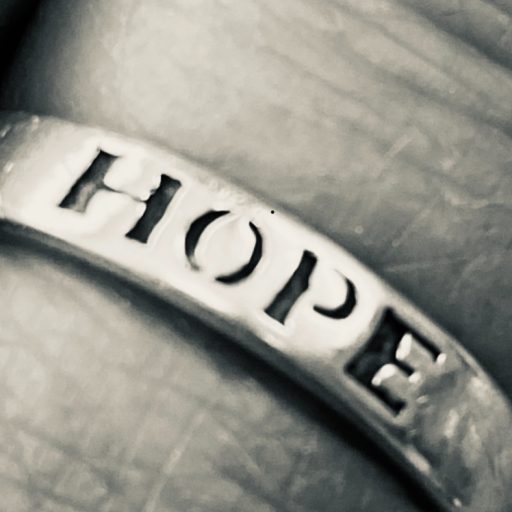
That day, as I looked at my own reflection — hollow-eyed, aching — something caught my attention. My hand. More specifically, the ring on my left hand. Etched into it was a single word: HOPE. And in that moment, that’s all I had left. Not influence. Not leverage. Not strategy or control or well-timed alliances. Just… hope. But hope, I’ve come to realize, isn’t weak. It isn’t passive. It’s not the absence of power — it’s the refusal to surrender your soul to someone else’s game.
Machiavelli once taught that it is better to be feared than loved if one cannot be both. But what if the most radical power we hold is the love we offer ourselves when the world tells us to abandon who we are? That day at the mirror, I didn’t plot revenge. I didn’t craft a better strategy. I simply whispered to myself:
“I will not betray my soul to survive someone else’s system.”
That whisper became the beginning of the HOPE Method™. Where Machiavelli teaches how to wield power over others, HOPE teaches how to return power to the self — through presence, truth, and energetic sovereignty.
So yes, I’ve shared this story before. But now I share it as a declaration: I stood at the edge of my own undoing… and chose to rebuild not through manipulation, but through alignment. Not through fear, but through HOPE.
Though often misunderstood as a champion of manipulation, Machiavelli’s core message reminds us that freedom requires awareness. The HOPE Method™ transforms this teaching through a vibrational lens: We do not manipulate to gain power — we heal to reclaim it. We do not pretend virtue — we become it. And we do not fear chaos — we learn to walk through it with our energy intact.
What’s Coming Next in the “Wisdom Through the Ages” Series
Machiavelli is just one of many historical figures we’re exploring through the lens of the HOPE Method™. This series honors ancient and ancestral wisdom — while translating it into soul-aligned guidance for our world today.
Here’s a glimpse of who’s next:
- Marcus Aurelius – on inner calm and Stoic self-leadership
- Mary Magdalene – on sacred presence, voice, and spiritual sovereignty
- Cleopatra – on feminine power, embodiment, and perception
- Hekate – on shadow integration and wise transitions
- Viktor Frankl – on meaning through suffering
- Kuan Yin – on compassion and vibrational healing
- Joan of Arc – on bravery, spiritual conviction, and truth
- Sappho – on soul expression and emotional intelligence through poetry
Because sometimes, to move forward… we must also remember.
Shop When the Soul Remembers HOPE book: books.by/wild-soul-hope and Amazon
 Wild Soul HOPE
Leave a comment